
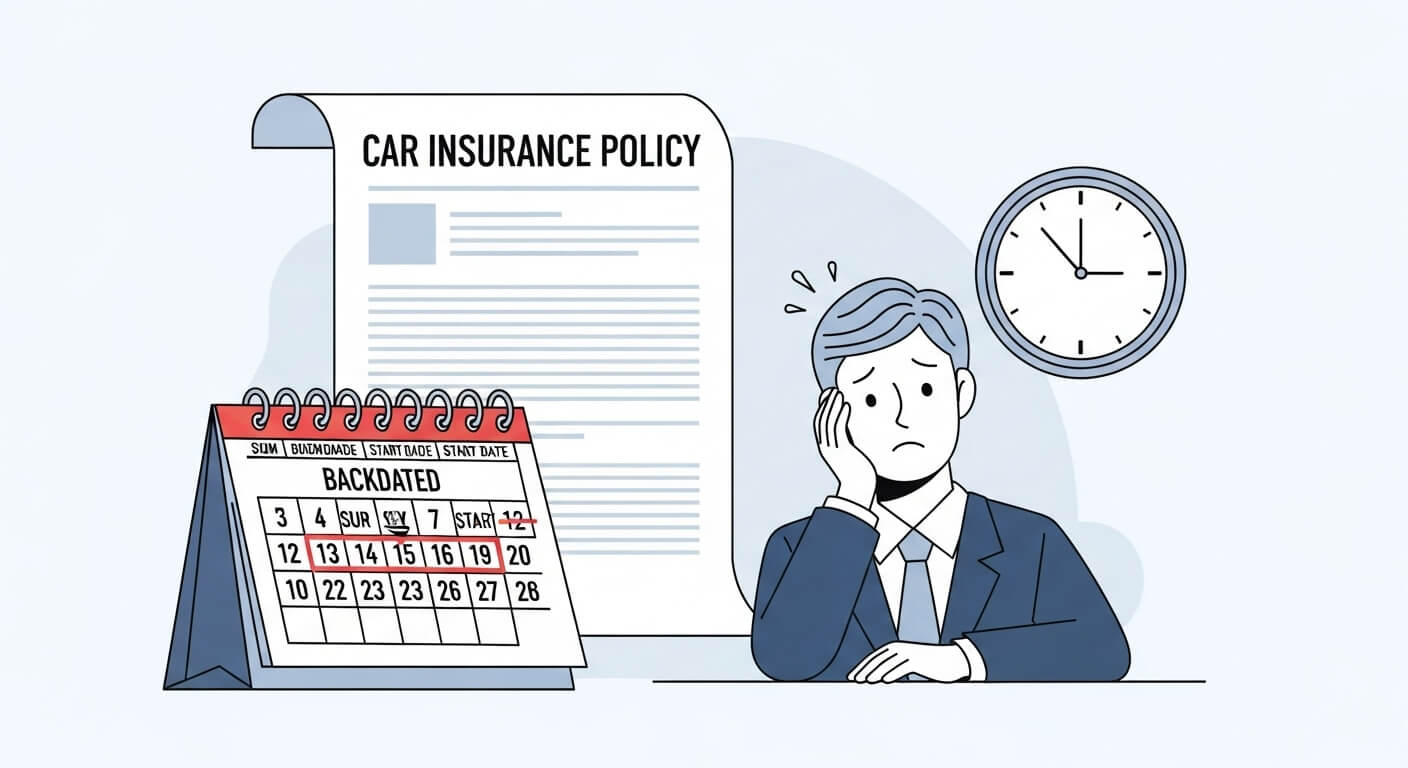
Imagine looking at your calendar and realizing your car insurance lapsed three days ago. Or perhaps you just bought a car over the weekend and forgot to call your agent until Tuesday. Panic sets in. You might find yourself frantically searching online, wondering if you can just pay for the missed days and pretend the gap never happened. You might specifically be asking: what insurance companies will backdate car insurance?
It’s a common question born out of stressful situations. No one wants a lapse in coverage on their record, nor do they want to face the legal penalties of driving uninsured. However, the world of insurance operates on strict risk assessments and timelines.
In this comprehensive guide, we will peel back the layers of this complex topic. We’ll explore whether retroactive coverage is a myth or reality, the strict conditions under which it might happen, and the serious legal implications involved. By the end, you’ll have a clear understanding of how to handle coverage gaps without jeopardizing your financial future.
Can Car Insurance Be Backdated? The Reality Check
To understand if can car insurance be backdated, we first need to define what backdating actually means in the insurance world.
Backdating insurance refers to the practice of making an insurance policy effective from a date in the past, rather than the current date or a future date. Essentially, it implies getting coverage for a period of time that has already occurred.
The General Rule: No Retroactive Coverage
For the vast majority of drivers in standard situations, the answer is a firm no. Most reputable insurance carriers will not issue a backdated auto insurance policy. The fundamental principle of insurance is transferring future risk. You pay a premium to protect against future uncertainties. Trying to insure a time period that has already passed—where you already know whether an accident occurred or not—goes against this core concept.
If insurance companies allowed people to buy coverage only after they had an accident or realized they forgot to pay, the entire system would collapse. Premiums would skyrocket because people would only pay when they needed a claim paid out.
Why You Can’t Usually Back Date Car Insurance
Insurance agents are bound by strict ethical and legal guidelines. Issuing a policy with an effective date prior to the application date is generally prohibited because it opens the door to fraud. If a company were to backdate car insurance policy dates regularly, they would be exposing themselves to “adverse selection”—meaning only high-risk individuals (those who already had accidents) would buy the product.
Backdating an Insurance Policy Occurs When…
While the general rule is strict, there are extremely limited administrative scenarios where a form of backdating might occur. It is crucial to understand that these are exceptions based on processing errors or specific company protocols, not a loophole for covering accidents that happened while uninsured.
Backdating an insurance policy occurs when:
- Administrative Errors: If you applied for insurance and paid your premium on time, but the insurance company or agent made a clerical error that delayed the policy issuance, they may backdate the policy to the date you originally applied. This corrects the mistake to reflect when you actually sought coverage.
- Payment Processing Delays: Sometimes, if a payment was made by mail or effectively processed on a weekend but not posted until a business day, a company might honor the date the payment was initiated.
- Specific Grace Periods: Some carriers offer insurance grace periods for renewals. If you miss a payment deadline by a few days but pay within the grace period, the company effectively “backdates” the coverage to ensure there is no lapse. However, this is for existing policies, not new ones.
In these rare cases, the backdating is used to fix a procedural gap, not to cover a period where you knowingly went without insurance.
Is Backdating Insurance Illegal?
This is the most critical section of this guide. Many people ask, “is backdating insurance illegal?” because they want to fix a mistake, but the implications are severe.
The Fraud Risk
Requesting an agent to backdate a policy specifically to cover an accident that has already happened is insurance fraud. It is a serious crime. If you lie about the date of an accident or try to secure a policy that starts yesterday to cover a crash that happened this morning, you are committing a felony in many jurisdictions.
Agent Liability
Insurance agents can lose their licenses, face heavy fines, and even serve jail time for knowingly backdating a policy to cover a known loss. Because the risks are so high for them professionally, you will be hard-pressed to find a legitimate agent willing to do this.
Therefore, when searching for what insurance companies will backdate insurance, you are essentially looking for companies that might have flexible administrative windows for reinstatement, not companies that will help you commit fraud.
Retroactive Auto Insurance: Does It Exist?
The term “retroactive auto insurance” is often used interchangeably with backdating. While we’ve established that buying a new policy for past dates is generally impossible, there is a concept that feels similar: Reinstatement without a Lapse.
Reinstatement of Lapsed Policies
If your policy was canceled due to non-payment, some insurers might offer reinstatement. If you pay the past-due amount within a specific timeframe (often less than 30 days), the company might agree to reinstate your policy effective the original cancellation date.
This means:
- You pay for the time you were not technically “covered” in their system.
- Your record shows continuous coverage (no lapse).
- CRITICAL CAVEAT: You usually have to sign a “Statement of No Loss.” This is a legal document stating you did not have any accidents or claims during the period the policy was lapsed. If you sign this and later try to file a claim for that period, you are committing fraud.
So, while can you backdate auto insurance technically be answered with “sometimes via reinstatement,” it does not provide the coverage for accidents that people are usually hoping for.
Practical Scenarios: When Backdating Might Come Up
To better understand can you backdate car insurance, let’s look at a few hypothetical scenarios. Note: These are examples for educational purposes only and do not constitute legal advice.
Scenario A: The Weekend Purchase
Situation: You buy a car on Saturday afternoon. The insurance agency is closed. You drive home. On Monday morning, you call your agent.
Outcome: Most insurance companies have automatic coverage clauses for newly acquired vehicles for existing policyholders. This means your new car might already be covered for a set period (e.g., 4-30 days) under your existing policy terms. When you call on Monday, the agent adds the car effective Saturday (the purchase date).
Is this backdating? Technically, yes, but it is a standard, legal contractual provision, not “fixing” a lapse.
Scenario B: The Missed Payment
Situation: Your policy canceled on the 1st of the month. You realize it on the 5th and call to pay. You haven’t driven the car or had any accidents.
Outcome: The insurer might agree to reinstate the policy effective the 1st, provided you pay the premium and sign a Statement of No Loss.
Is this backdating? Yes, it is a reinstatement that removes the lapse from your record.
Scenario C: The Uninsured Accident
Situation: You let your insurance expire last month. Yesterday, you backed into a pole. You want to buy insurance today that starts two days ago.
Outcome: No legitimate insurance company will do this. If you find car insurance that back dates under these pretenses, it is likely a scam or an illegal operation.
Why Do People Search for Backdated Policies?
The primary driver behind the search for what insurance companies will backdate car insurance is usually fear of the consequences of a lapse.
- DMV Fines: Many states monitor insurance status electronically. A lapse can trigger fines or license suspension.
- Higher Premiums: A lapse in coverage signals to insurers that you are a higher risk. When you eventually get new insurance, the premiums will likely be significantly higher.
- Lease/Loan Requirements: Lenders require continuous coverage. A lapse can violate your loan agreement.
While the desire to fix these issues is understandable, backdating is rarely the legal solution.
Alternatives to Backdating: What Can You Do?
If you have a lapse, you cannot fix the past, but you can correct the future.
1. Get Covered Immediately
Don’t wait. Every day you wait extends the lapse. Purchase a new policy effective immediately. Even if you have a gap, showing you rectified it quickly helps.
2. Explain the Situation
If the lapse was due to a genuine error (like a bank error or hospitalization), document it. Some carriers may be lenient with their “continuous coverage” discounts if you can prove the lapse was beyond your control, even if they can’t backdate the policy.
3. Ask About Grace Periods
Check your policy documents for insurance grace periods. You might still be within a window where payment can restore your coverage seamlessly.
4. Look into Temporary Options
While true “temporary” insurance is rare in the US, understanding your options for short-term needs is vital. Check our guide on temporary car insurance for more details on flexible coverage options.
Policy Considerations and YMYL (Your Money Your Life)
Since insurance affects your financial stability and legal standing, it falls under YMYL (Your Money Your Life) content. Accuracy is paramount.
When you are looking for backdated auto insurance, you are navigating a minefield of potential fraud. Be wary of any agent or website that promises to “fix” an accident record by backdating a policy.
Legitimate insurance protects you from financial ruin. Trying to manipulate dates can lead to:
- Policy Rescission: The company cancels your policy flat out, as if it never existed.
- Blacklisting: You may be placed on industry watchlists, making it nearly impossible to get affordable insurance in the future.
- Legal Action: Insurance fraud is prosecuted aggressively.
Always prioritize honesty with your insurer. Consult our car insurance policy tips for advice on how to manage your coverage correctly and avoid lapses in the first place.
Frequently Asked Questions (FAQ)
Can car insurance be backdated?
In general, no. You cannot buy a new policy today that covers days in the past. The only exceptions are specific administrative reinstatements for existing customers where no claims have occurred (Statement of No Loss) or corrections of clerical errors.
Is backdating insurance legal?
Backdating becomes illegal if it is done to cover a known loss (an accident that has already happened) or to defraud the insurance company. However, administrative backdating to correct a processing error or honor a grace period is legal and standard practice.
What companies allow backdating auto insurance?
No reputable insurance company advertises “backdating” as a feature. Major carriers like Geico, State Farm, Progressive, and Allstate operate under strict regulations that prevent issuing retroactive policies for new customers. Any “company” promising to backdate coverage to hide an accident should be viewed with extreme suspicion.
Does a lapse in coverage affect my rates?
Yes. Insurance companies view continuous coverage as a sign of responsibility. A gap, even a short one, can classify you as a “high-risk” driver, leading to higher premiums when you do purchase a new policy.
Can I get retroactive insurance for a rental car?
Generally, no. Rental car insurance or damage waivers must be accepted at the time of rental or before the damage occurs. You cannot buy the coverage after you have damaged the vehicle.
Conclusion
The search for what insurance companies will backdate car insurance often leads to a hard truth: you cannot insure the past. The insurance industry is built on predicting future risk, not paying for past mistakes.
While administrative backdating exists to fix clerical errors or bridge small gaps for existing customers, purchasing a new policy to cover a past timeframe is virtually impossible and legally dangerous. The best course of action is to maintain continuous coverage, utilize autopay to avoid accidental lapses, and if a gap occurs, secure new insurance immediately to minimize the damage to your driving record.