
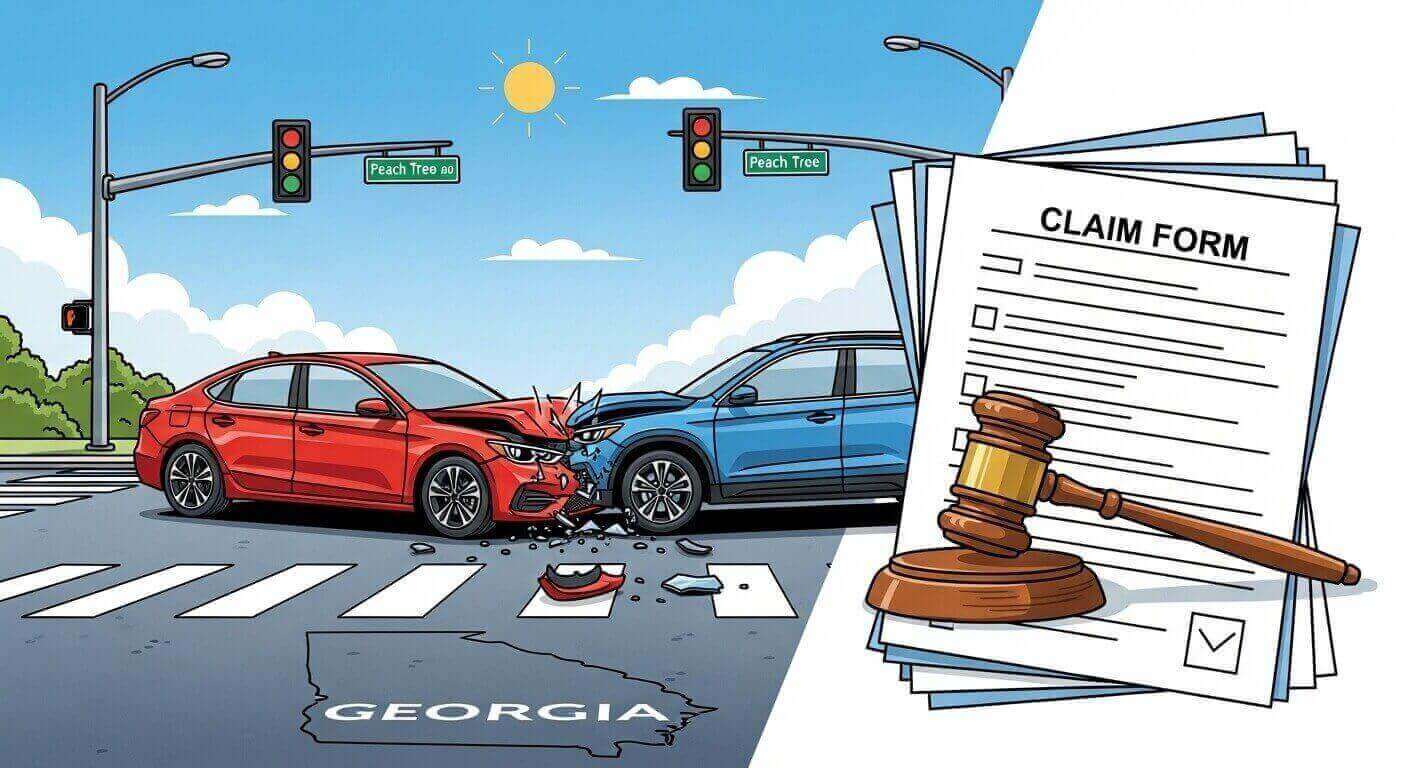
When you’re involved in a car accident, the last thing you want is confusion about who pays for the damages. Understanding your state’s insurance laws is crucial, and a common question for drivers in the Peach State is: Is Georgia a no fault car insurance state? The short and direct answer is no. Georgia is an “at-fault” state, which has significant implications for how car accident claims are handled.
This guide will break down exactly what that means for you as a driver. We will explore the differences between at-fault and no-fault systems, detail Georgia’s specific insurance requirements, and explain how claims are processed after an accident. Understanding these rules is the first step to protecting yourself financially on the road.
At-Fault vs. No-Fault Systems: What’s the Difference?
To fully grasp Georgia’s car accident laws, it’s important to understand the two main types of car insurance systems in the United States: at-fault and no-fault. The primary difference lies in who is responsible for paying for injuries and damages after a crash.
How a No-Fault Insurance System Works
In a “no-fault” state, your own car insurance policy is required to include Personal Injury Protection (PIP). If you are in an accident, your own PIP coverage pays for your medical bills and certain related expenses, regardless of who caused the accident. This system is designed to speed up the payment process for medical treatments, as you don’t have to wait for a fault determination.
However, no-fault systems place limits on your ability to sue the other driver. You can typically only file a lawsuit for severe injuries that meet a certain threshold, which can be defined as a monetary amount for medical costs or a specific type of injury (like permanent disfigurement).
How an At-Fault Insurance System Works
Georgia operates under an “at-fault” system, also known as a tort system. This means that the person who is legally responsible for causing the accident is also responsible for paying for the damages. If you are injured or your car is damaged by a negligent driver, you have three primary options for seeking compensation:
- File a claim with the at-fault driver’s insurance company. This is the most common route.
- File a claim with your own insurance company. You might do this if you have specific coverages like collision or uninsured motorist coverage. Your insurer would then likely seek reimbursement from the at-fault driver’s insurance company.
- File a personal injury lawsuit against the at-fault driver. This option allows you to seek compensation for medical bills, lost wages, pain and suffering, and property damage directly from the responsible party.
Because is Georgia a no-fault state is a question with a clear “no” answer, understanding your rights and responsibilities in this at-fault framework is essential for every Georgia driver.
Is Georgia an At-Fault State? Yes, and Here’s What It Means
Since Georgia is an at-fault state, determining who caused the accident is the most critical step in any insurance claim process. Police reports, witness statements, photos of the scene, and traffic citations all become vital pieces of evidence. The at-fault party’s liability insurance is what covers the other person’s losses.
This system directly impacts how you handle an accident. After a collision, you must prove the other driver was negligent to receive compensation from their insurer. This is very different from a no fault insurance in Georgia system, where you would simply turn to your own policy first for injury costs. The concept of no fault insurance Georgia simply doesn’t apply here.
Real-World Example: An At-Fault Claim in Georgia
Imagine you are driving in Atlanta and another driver runs a red light, T-boning your car. You suffer a broken arm and your car is significantly damaged.
Because Georgia is an at-fault state, the other driver is clearly negligent. You would file a claim against their liability insurance. Their policy would be responsible for paying for:
- Your medical bills (hospital visit, cast, physical therapy).
- Your lost wages if you miss work due to the injury.
- The cost to repair or replace your vehicle.
- Potentially, compensation for your “pain and suffering.”
If this had happened in a no-fault state, your own PIP coverage would have paid for your medical expenses up to your policy limit, regardless of the other driver running the red light.
Georgia Minimum Auto Liability Insurance Requirements: 25/50/25
So, is car insurance required in Georgia? Absolutely. The state mandates that all drivers carry a minimum amount of liability coverage to ensure they can pay for damages they may cause. These minimums are often referred to by the shorthand “25/50/25.”
Here’s what Georgia minimum liability insurance 25/50/25 covers:
- $25,000 in Bodily Injury Liability per person. This is the maximum amount an insurer will pay for injuries to a single person in an accident you cause.
- $50,000 in Bodily Injury Liability per accident. This is the total maximum amount the insurer will pay for all injuries in a single accident you cause, if multiple people are hurt.
- $25,000 in Property Damage Liability per accident. This is the maximum amount the insurer will pay for damage you cause to another person’s property (like their car, a fence, or a building).
This is the state minimum auto insurance Georgia requires, and it’s illegal to drive without it. When people ask, “in Georgia what are the requirements for liability car insurance?” this 25/50/25 rule is the answer. It’s important to note that these are just minimums. Medical bills and vehicle repair costs can easily exceed these limits in a serious accident, which is why many financial experts recommend purchasing higher levels of coverage.
What Are the Consequences of Driving Without Insurance in Georgia?
The penalties for being an uninsured driver are severe. If you can you drive without insurance in Georgia, the answer is a firm no. If caught, you could face:
- Misdemeanor charges.
- Fines and court fees.
- Suspension of your vehicle registration and driver’s license.
- License reinstatement fees.
Worse, if you cause an accident while uninsured, you are personally responsible for all the damages. This could lead to financial ruin, as you could be sued and have your assets seized or wages garnished to pay for the other party’s losses.
Uninsured Motorist Coverage in Georgia
What happens if you’re hit by a driver who doesn’t have insurance? This is where Uninsured Motorist (UM) coverage becomes your financial safety net.
Is Uninsured Motorist Coverage Required in Georgia?
No, is uninsured motorist coverage required in Georgia is a common question, but this coverage is not mandatory. However, insurance companies are required by law to offer it to you. You must reject it in writing if you do not want it. Given the risks, carrying uninsured motorist coverage in Georgia is highly recommended.
Georgia uninsured motorist coverage comes in two forms:
- Traditional (or Non-stacking): This type of UM coverage pays out only if the at-fault driver has no insurance or if their liability limits are less than your UM limits.
- Add-on (or Stacking): This is the more beneficial type. It allows your UM coverage to be added on top of the at-fault driver’s liability coverage. For example, if the at-fault driver has the minimum $25,000 in bodily injury coverage but your medical bills are $50,000, you could use your own $25,000 in add-on UM coverage to cover the remaining costs.
Uninsured motorist coverage Georgia protects you not only from uninsured drivers but also from underinsured drivers—those who have insurance, but not enough to cover all your damages. It also covers you in the event of a hit-and-run accident where the at-fault driver cannot be identified.
No-Fault Insurance vs. Full Coverage: A Clear Comparison
Many drivers get confused by insurance terminology. Let’s clarify the difference between two commonly misunderstood concepts.
- No-Fault Insurance: As discussed, this is a type of insurance system that dictates how claims are paid. It is not a type of policy you can buy in Georgia. The question is Georgia a no fault state for auto insurance is answered with a no, so this system doesn’t apply.
- Full Coverage: This is not an official type of policy but an industry term for a combination of coverages that offers broad protection. What is full coverage insurance in Georgia? It typically includes:
- Liability Coverage: This is the state-mandated 25/50/25 coverage (or higher limits) that pays for damages you cause to others.
- Collision Coverage: This pays to repair or replace your own car after an accident, regardless of who is at fault.
- Comprehensive Coverage: This pays for damage to your car from non-collision events, such as theft, vandalism, fire, hail, or hitting an animal.
So, when comparing no fault insurance vs full coverage, you’re really comparing a legal system (no-fault) with a package of insurance policies (full coverage). In Georgia, you cannot get no-fault insurance, but you can and often should purchase a full coverage policy to protect your own vehicle and financial interests.
What Happens If the At-Fault Party Is Not Insured?
This is a stressful and unfortunately common scenario. If the at-fault party not insured hits you, your options depend on the coverages you have.
- Use Your Uninsured Motorist (UM) Coverage: This is precisely what UM coverage is for. You would file a claim with your own insurance company under your UM policy. Your insurer will cover your medical bills and, depending on the policy, lost wages and pain and suffering, up to your coverage limits.
- Use Your Collision Coverage: For damage to your vehicle, you can file a claim under your own collision coverage. You will have to pay your deductible, but your insurance company will cover the rest of the repair costs. Your insurer may then attempt to recover the costs (including your deductible) from the uninsured driver directly, a process called subrogation.
- File a Lawsuit: You have the right to sue the at-fault driver personally. However, this can be a long and difficult process. A common problem is that a driver who cannot afford insurance often does not have the assets to pay a legal judgment.
This highlights why relying on other drivers to be responsible is a risky strategy. Having robust coverage on your own policy is the best way to protect yourself.
Frequently Asked Questions (FAQ)
Is Georgia a no fault state?
No, Georgia is an at-fault state. This means the driver who is legally determined to be responsible for an accident is liable for the resulting damages, including medical expenses and property damage for the other party.
Is car insurance required in Georgia?
Yes. All drivers are legally required to carry, at a minimum, liability insurance with limits of 25/50/25: $25,000 for bodily injury per person, $50,000 for bodily injury per accident, and $25,000 for property damage per accident.
What is the minimum liability insurance required in Georgia?
The georgia minimum liability coverage is 25/50/25. This provides basic financial protection if you cause an accident, but costs for serious accidents can far exceed these amounts.
What happens if the at fault party is not insured?
If you are hit by an uninsured driver, you will need to rely on your own insurance policy. Your Uninsured Motorist (UM) Bodily Injury coverage would cover your medical costs, and your Collision coverage would pay for your vehicle repairs. Without these coverages, you would have to pay out-of-pocket and could attempt to sue the driver directly.